9Hotel Bastille-Lyon, just minutes away from Cour Saint-Émilion
Cour Saint-Émilion
Location & Comfort
9Hotel Bastille-Lyon: Your Ideal Hotel for Visiting the Cour Saint-Émilion
Located at 23 rue de Lyon, just a short walk from the Gare de Lyon, the 9Hotel Bastille-Lyon enjoys a prime location in Paris’s 12th arrondissement, making it easy to reach the cobblestone streets and lively terraces of the Cour Saint-Émilion.
To get to Cour Saint-Émilion from the hotel, guests have two options: a leisurely 30-minute stroll along the banks of the Seine, passing by the Ministry of Economy and Finance, or a lightning-fast 12-minute metro ride on Line 14, directly from the Gare de Lyon station to the Cour Saint-Émilion station. The hotel staff, always available at the front desk, is happy to recommend the best routes, advise on peak times to avoid, and suggest must-visit restaurants once you arrive.
The 9Hotel Bastille-Lyon was designed for both business travelers and curious visitors. Its immediate proximity to the metro lines (1 and 14) and the RER makes it an ideal base for getting around the capital. Between sightseeing trips or business meetings, the hotel offers a true haven of calm and vitality. You can enjoy a welcoming lobby and a coworking space perfectly equipped for working in peace. In the morning, a full breakfast buffet featuring fresh ingredients awaits you to help you start your day with energy.
Rooms
Rooms with an industrial-loft-style
To enhance the experience, the 9Hotel Bastille-Lyon features 48 cozy rooms with a contemporary design, ideal for recharging in peace after a day of exploring Paris.
Skillfully blending warm wood accents, black metal structures, and loft-inspired details, each space features premium bedding and modern amenities (air conditioning, free high-speed Wi-Fi, and a functional work area).
Discover our spaces designed to suit every traveler’s needs:
- Single Room: A compact 10–12 m² alcove with a view of our inner courtyard, designed for a functional solo stay.
- Classic Room: A cozy retreat measuring 11 to 15 m² for two people, ideal for a Paris getaway as a couple.
- Classic Twin Room: A practical layout measuring 10 to 14 m² with two single beds, perfect for a trip for two.
- Superior Room: Our most spacious room (12 to 16 m²), featuring high-end furnishings and plenty of natural light.
History
The Rich Winemaking History of the Cour Saint-Émilion
Before becoming the lively gathering place we know today, the Cour Saint-Émilion was, for nearly two centuries, the beating heart of the wine trade in Paris. Its history dates back well before the French Revolution.
The name Bercy first appears in the 12th century, when the village was still outside the city limits of Paris. It was in the early 18th century, during the reign of Louis XIV, that the wine trade truly took root there: the king authorized a tax exemption for wines stored in Bercy, provided they remained outside the Paris city walls, where a tollgate, located on the Quai de la Rapée, taxed all goods entering the capital. Storing wine in Bercy thus allowed merchants to avoid this indirect tax while the wine was being blended.
In 1810, Baron Louis, then Minister of Finance, purchased vast tracts of land in Bercy and developed such a thriving business there that he turned it into one of the largest wine warehouses in the world. In the 19th century, the economic power of the Bercy merchants was such that they gained the ear of Napoleon III to standardize the units of measurement used by producers throughout France. Wine consumption in Paris skyrocketed during this period, rising from about one million hectoliters in 1800 to more than three and a half million in 1865—wine that was largely stored, blended, and then bottled in Bercy before being distributed throughout the capital.
Fun Facts
The Mysterious Railroad Tracks Running Through the Cour Saint-Émilion
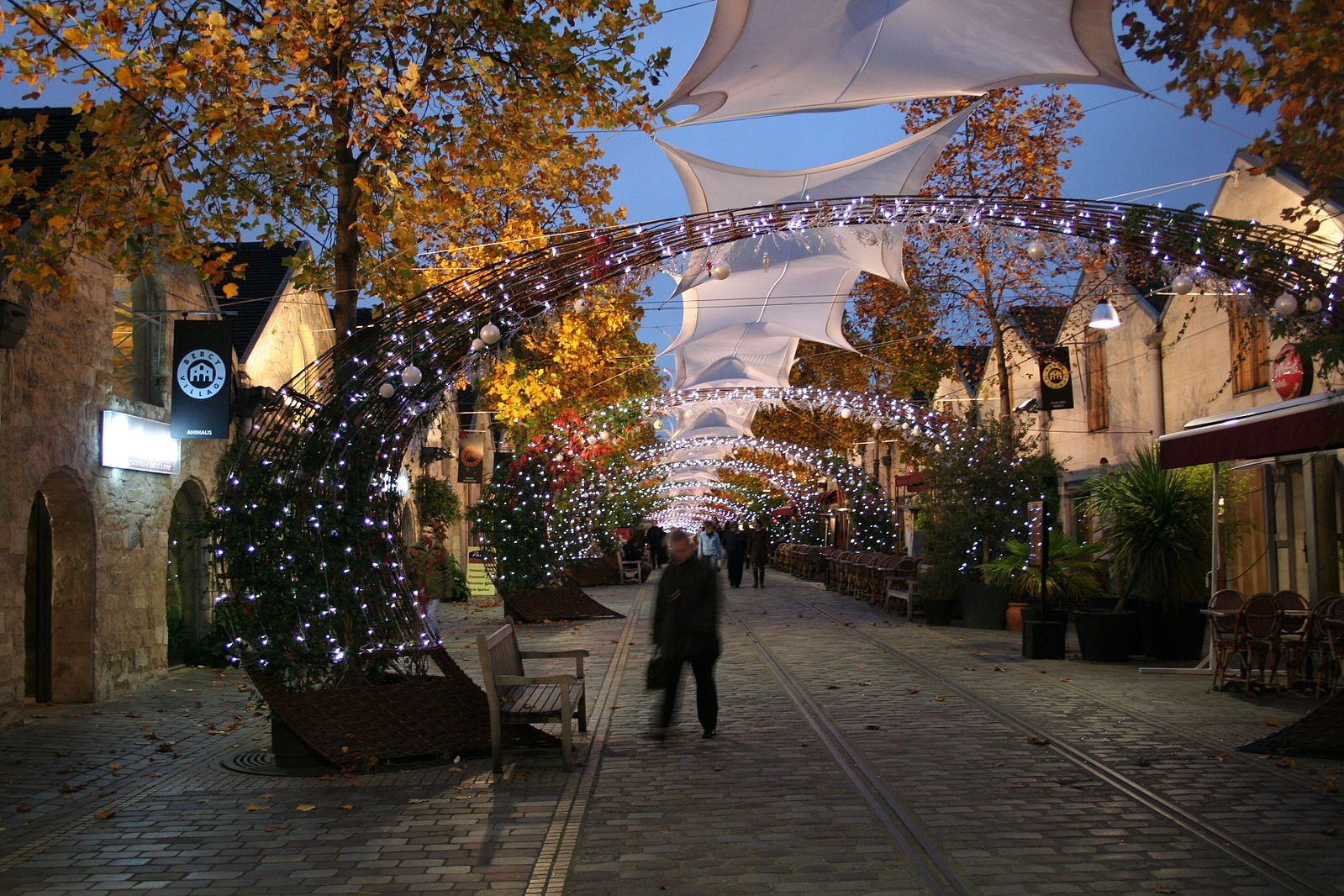
As they walk along the cobblestones of the courtyard, one detail often intrigues the most observant visitors: railroad tracks that are still visible, but on which no trains have run for decades.
These tracks bear witness to the golden age of rail transportation at the Bercy warehouses. During the First Empire, as demand for wine continued to grow, a new market hall was built, but its capacity was quickly exceeded. To speed up the transport of barrels—which until then had been carried by boat on the Seine—rail tracks were laid directly on the cobblestones: these are the ones we can still admire today.
In 1869, under Napoleon III, the government decided to expand and renovate the entire warehouse complex—which then covered forty-two hectares—with the construction of the Petit Bercy and the Grand Bercy, entrusted to the famous architect Viollet-le-Duc. The merchants, no longer content merely to bottle wine, also began blending on site—a practice that made their fortune well into the 1960s, before growing consumer demand for estate-grown wines heralded the end of this activity.
Even today, if you listen closely while sipping a glass on a terrace, you can almost hear the echo of the wine merchants haggling over their precious barrels.
Lifestyle
Cour Saint-Émilion: The Art of Parisian Strolling
Nestled between two rows of renovated wine cellars, the Cour Saint-Émilion has become one of Parisians’ favorite hangouts: wine bars, restaurants, and cobblestone terraces invite you to slow down and enjoy a drink.
As soon as the first rays of sunshine appear, the tables and benches at Cour Saint-Émilion fill up with a diverse crowd: employees from nearby offices coming for lunch or after-work drinks, families, and tourists out for a weekend stroll. Just a stone’s throw from the Ministry of Economy and Finance and the Accor Arena—the former Palais Omnisports de Paris-Bercy, the largest sports and concert venue within Paris proper—the neighborhood attracts both local regulars and passing visitors.
True to its winemaking heritage, the Cour Saint-Émilion hosts annual wine-themed festivities, starting with the celebration of the arrival of Beaujolais Nouveau, which is particularly lively on the neighborhood’s cobblestone terraces. It’s the perfect getaway for guests at the 9Hotel Bastille-Lyon looking for a fun evening just a few metro stops from their room.
Heritage
Bercy Village, a neighborhood transformed by major Parisian development projects
It was during François Mitterrand’s presidency that the old wine-growing village of Bercy underwent its last major transformation, giving rise to the cultural and commercial district we see today.
In the early 1980s, the Palais Omnisports de Paris-Bercy—now the Accor Arena, with a capacity of over 20,000—was built along the banks of the Seine.
A few years later, in 1990, the Ministry of Economy and Finance moved into the area between the 9Hotel Bastille-Lyon and the Cour Saint-Émilion. This restructuring of the neighborhood, combined with the decline of the wine trading business, marked the end of warehouse operations. Their legacy, however, lives on in several places: in Bercy Park, built on their former site and which still preserves some of the old pavilions, as well as in the Cour Saint-Émilion itself, which gave its name to the nearby metro station. Some wine cellars, such as the Lheureux cellars, were even listed in the Supplementary Inventory of Historic Monuments as early as 1985; today they house the Pavillons de Bercy, dedicated to the heritage of the performing arts and fairground attractions.
Finally, it was this historic architecture that inspired the shopping and entertainment district of Bercy Village, which opened in 2000 around the Place des Vins-de-France—a subtle tribute to Pierre Le Roy de Boiseaumarié, the creator of the appellations d’origine contrôlée (AOC) system, which permanently transformed the quality of French wines.
Frequently Asked Questions
Everything you need to know before you go
How far is the 9Hotel Bastille-Lyon from Cour Saint-Émilion?
It’s about a 30-minute walk along the Seine, or just a 12-minute metro ride on Line 14 from Gare de Lyon station to Cour Saint-Émilion station.Is Cour Saint-Émilion within walking distance of Gare de Lyon?
Yes, it’s a pleasant walk that follows the banks of the Seine the entire way, passing by the Ministry of Economy and Finance along the way.What is there to do in the Cour Saint-Émilion besides visiting wine bars?
The neighborhood also offers shops, a shopping center, the Parc de Bercy for a break in the greenery, and the Pavillons de Bercy for lovers of heritage and fairground arts.Is the neighborhood lively in the evening?
Yes, the Cour Saint-Émilion is particularly popular on weekdays for after-work gatherings, with many outdoor seating areas open late into the evening.Are there any regular events held there?
Yes, the neighborhood celebrates the arrival of Beaujolais Nouveau every year, a nod to its rich history as the world’s largest wine warehouse.
Some of the images used have been edited using artificial intelligence.